Long before it was a roofing system, this technology had to hold up underground, unattended, for decades at a time. That standard hasn't changed — and now it's available, with consultation, to contractors and property owners nationwide.
The company is established under the trade name Armor Shield Inc., built around fiberglass construction of underground petroleum storage tanks — vessels held to a standard of decades without failure, since a leak means contaminated ground.
Over the following years, the company develops a wide range of fiberglass products for the petroleum industry, accumulating over 165 patents in fiberglass construction along the way.
The same composite approach is applied to a flat roof system and installed across the company's own facilities — in active, real-world conditions — for more than three decades before it's brought to market.
Scott Sharp now owns and runs Armor Shield, carrying the same material and the same testing standard forward — manufactured and distributed nationwide to contractors and property owners, with headquarters in Cincinnati, OH.
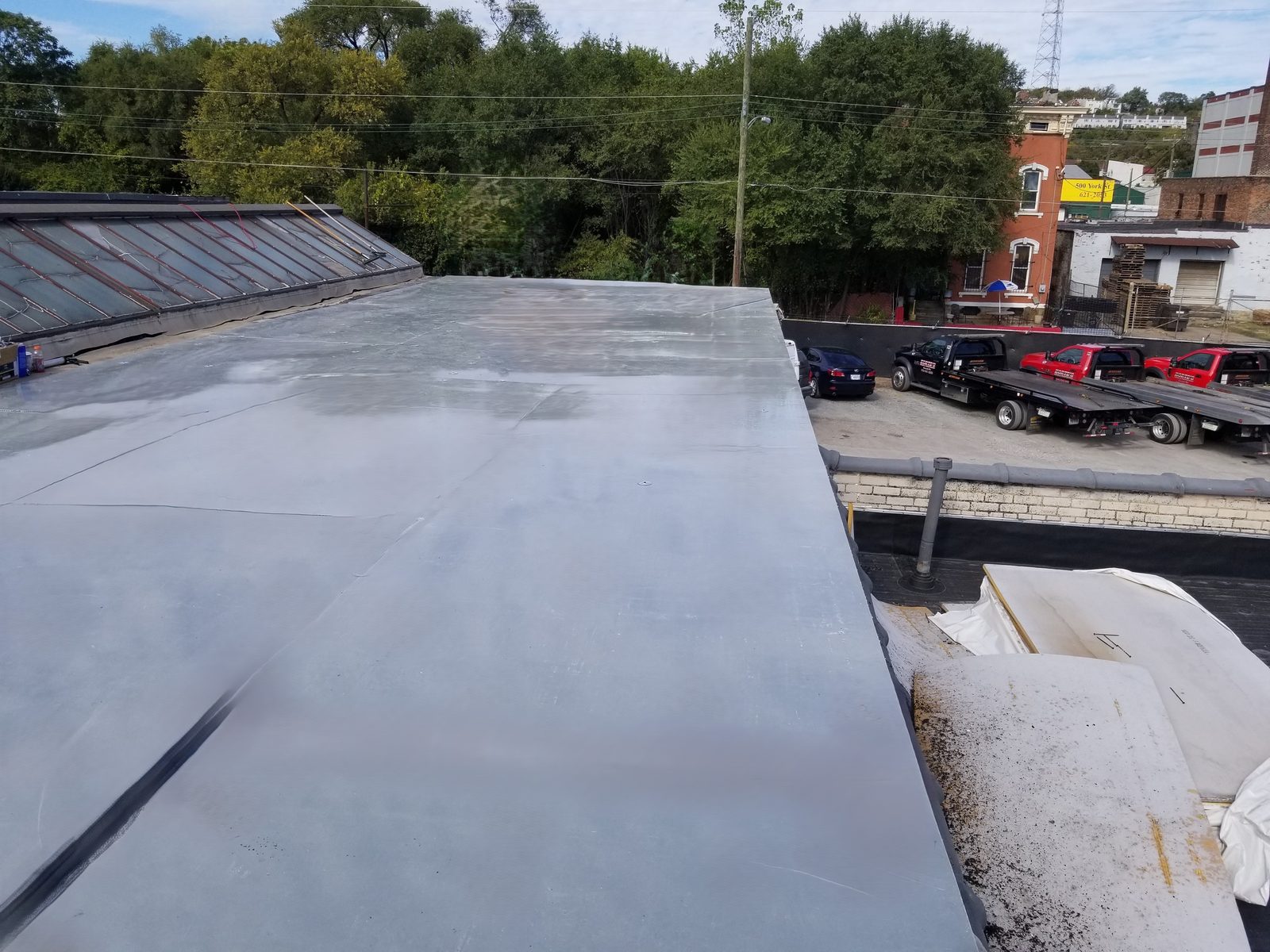
Every material decision is tested in the field first, on the company's own buildings, for years at a time — the same discipline required in underground fuel storage, where failure isn't an option.
Roofing has no licensing requirement the way other trades do — so Armor Shield holds itself to the petroleum industry's testing standards instead, because that's the standard the material was built for.
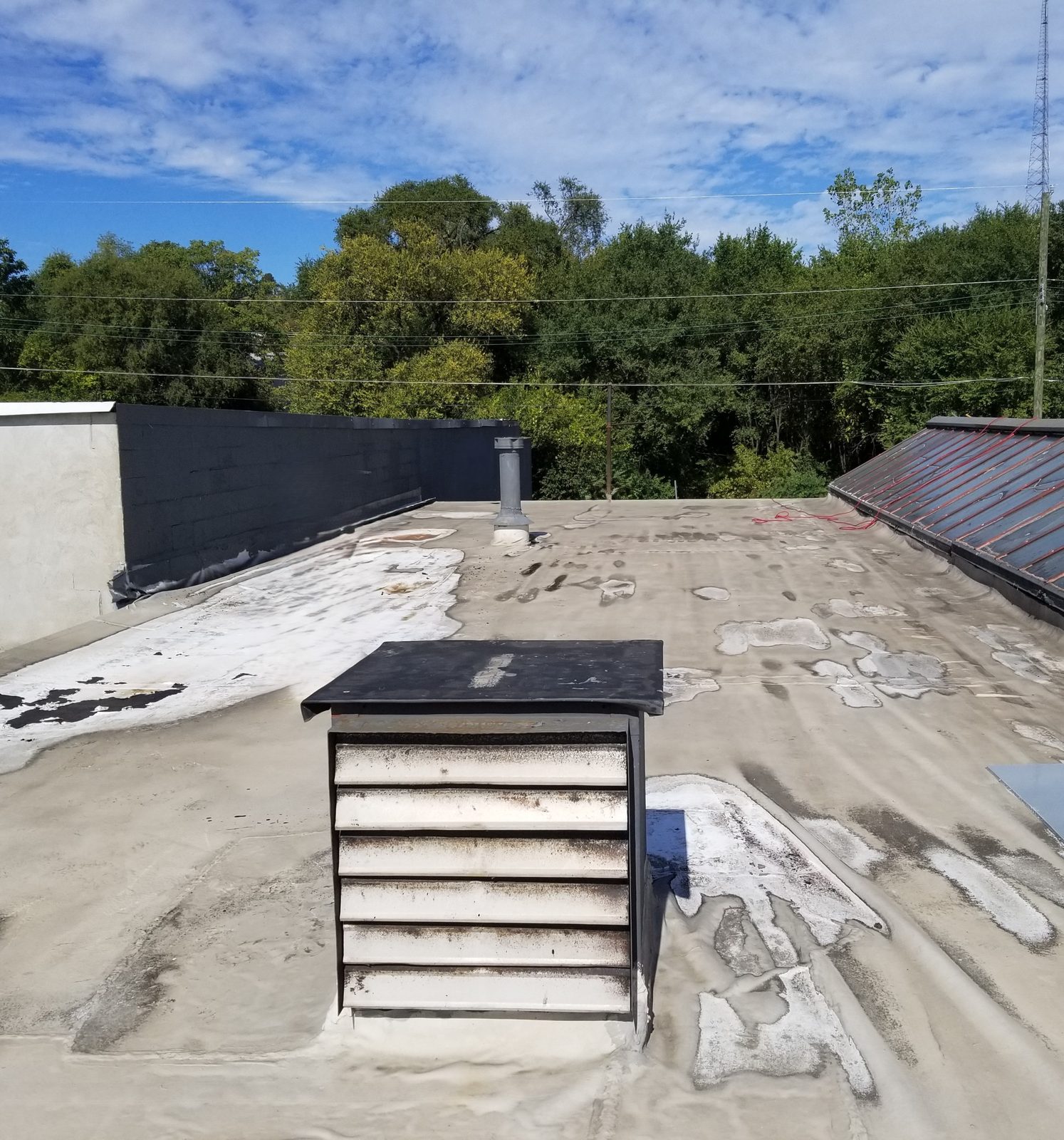
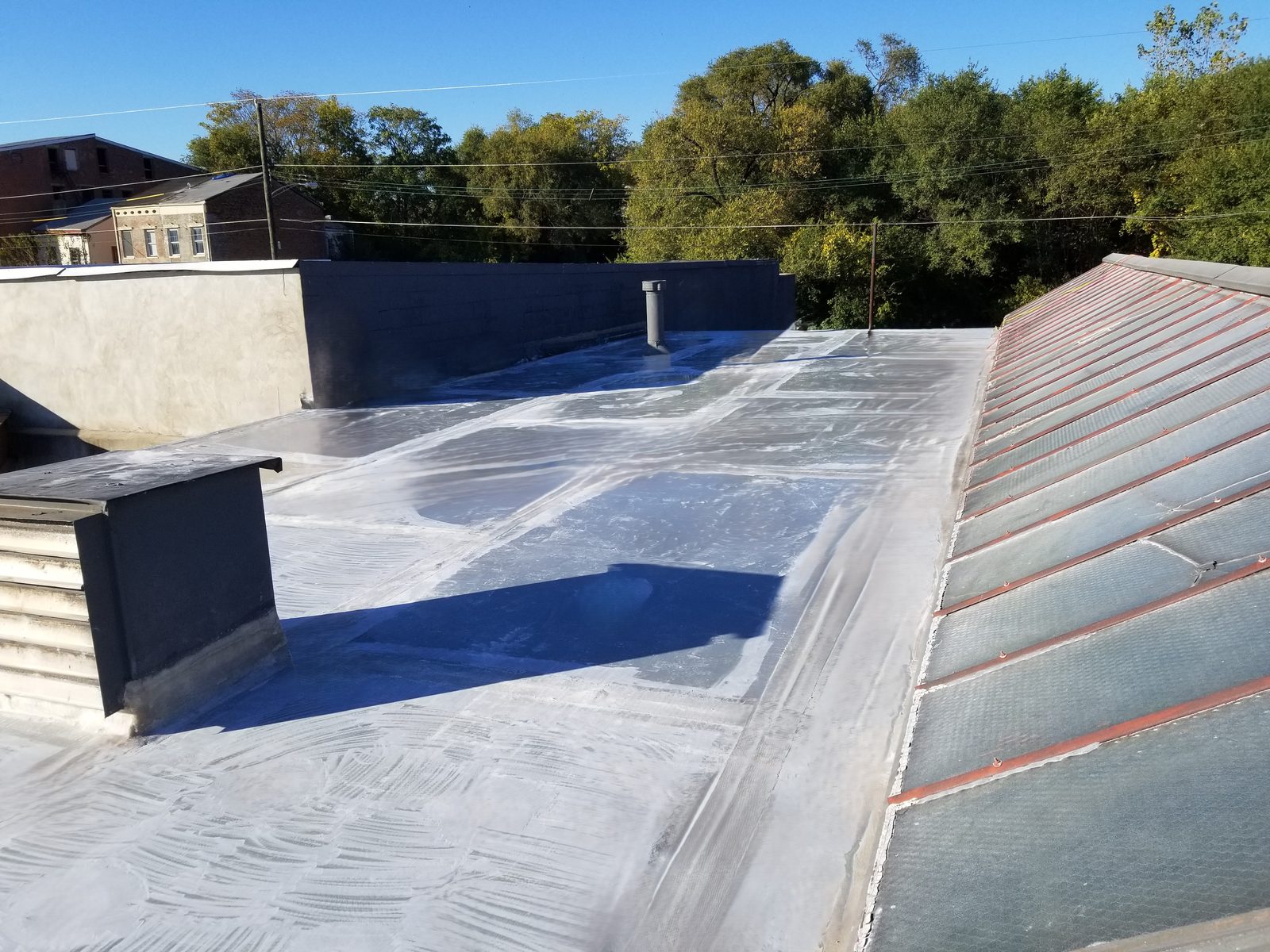
A roof before renewal, and a roof after the Armor Shield system is applied.
"We test everything ourselves, on our own buildings, before it ever goes on a customer's roof. That's extreme testing — and it's why we stand behind how long this system lasts."